Photo: © UN Climate Change - Kiara Worth
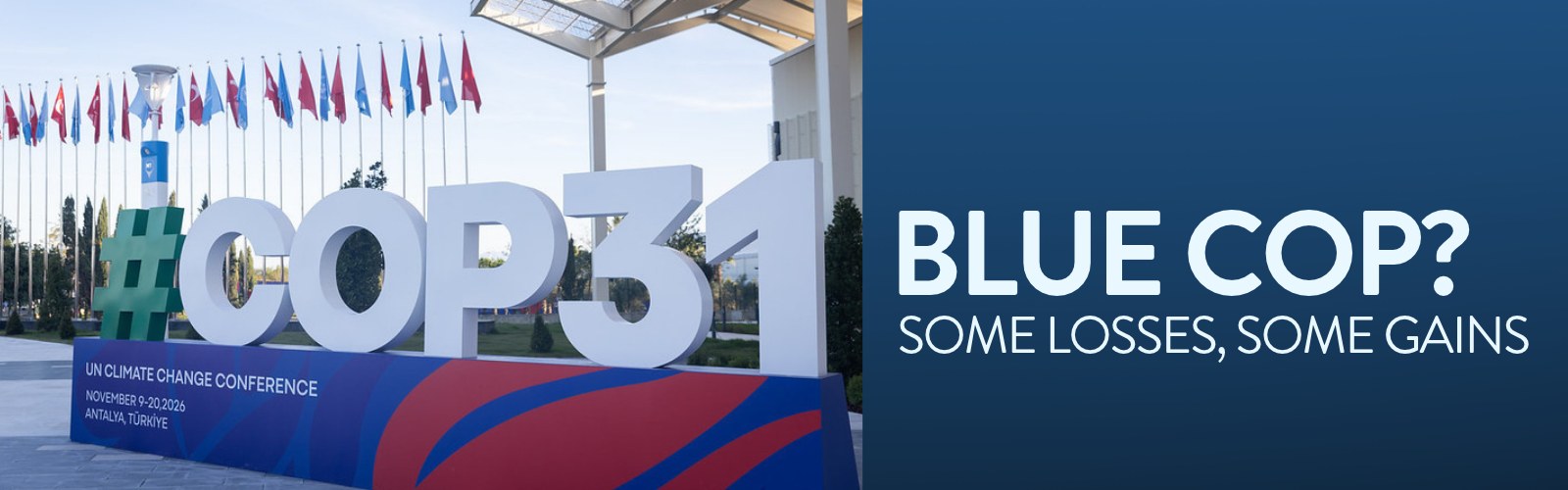
COP31 closed late on Sunday 22 November, two days after its scheduled end, without a formal decision. Tying up negotiations, a few hold-out countries were still unwilling to state plainly and clearly that the world must accelerate the transition away from fossil fuels as the number one action to keep global warming below crucial levels spelled out in the Paris Agreement.
Without this fundamental truth being acknowledged, many countries were willing to walk away from negotiations, marking a grave moment as we anticipate the next global stock take of progress in 2028.
From our perspective, the world can no longer afford to ignore the truth about the impacts of greenhouse gas and carbon emissions driving massive changes across our planet and our ocean. Ocean acidification is one of the clearest signs of what carbon emissions are already doing to the ocean. We commend the countries that held firm and are standing up to those who continue to deny the scale and impact of carbon emissions across our societies, cultures and communities.
That said, no deal in Antalya doesn't mean no action. We saw an enormous shift in momentum and ambition behind ocean-climate action that will go forward even without a formal COP31 decision. Through the UNFCCC Action Agenda Oceans Theme and many other initiatives like the OA Alliance, countries, civil society organizations, companies and local governments that are committed will continue to make a difference.
Additionally, the COP31 Turkish Presidency's release of the ‘Antalya Ocean and Seas Compact’ sends a very clear signal that the ocean belongs at the heart of UNFCCC climate action. Building on and advancing a 10-year legacy of leadership from civil society, the Compact makes crystal clear that Parties must continue insisting on stronger implementation of ocean-based climate action and increased access to finance.
How did ocean acidification measure up?
🇹🇷 The Antalya Ocean and Seas Compact – “Recognizes that marine pollution, ocean warming, acidification, deoxygenation and biodiversity loss, together with sea-level rise and extreme events, undermine the climate regulating functions and ecosystem health of ocean and seas and pose risks to global food security, livelihoods, resilience and sustainable development of coastal communities.” Further, the Compact invites Parties to advance complementary action on climate change, biodiversity, pollution prevention, and ocean acidification.
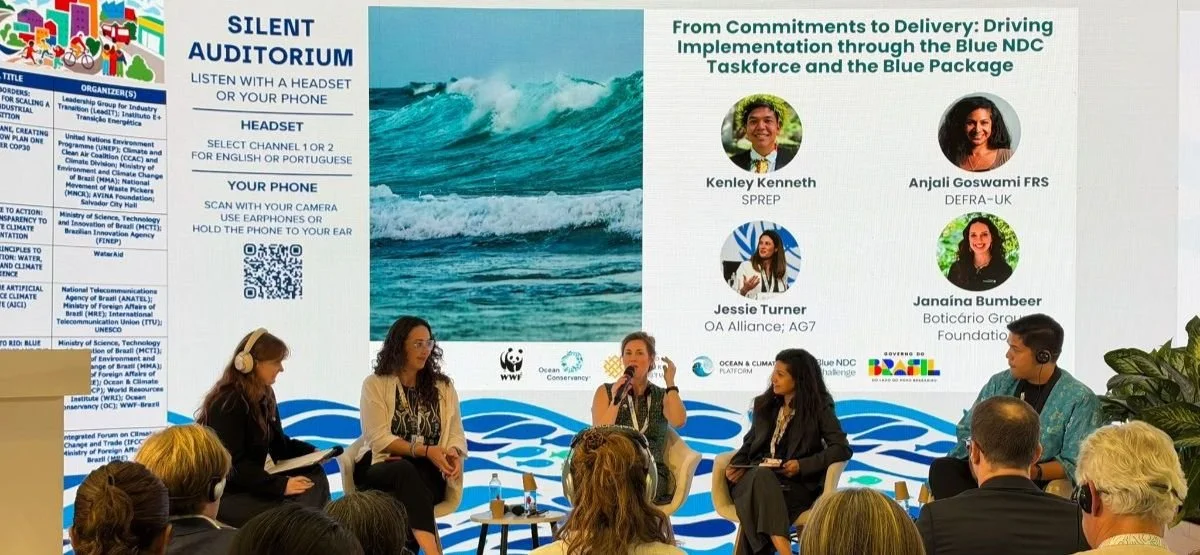
🌊 National Plans (NDCs and NAPs) – The OA Alliance announced it has become a delivery partner of the newly launched Blue NDC Challenge Implementation Task Force, a country-led initiative co-chaired by Brazil and France that aims to turn ocean measures in NDCs into practical action. A first cohort of 25 delivery partners, including experts in maritime transport, energy, aquatic foods, marine conservation, climate finance, scientific research and policy, will support countries in overcoming implementation barriers and accelerating progress. Few NDCs yet address acidification directly, and that is where we will focus.
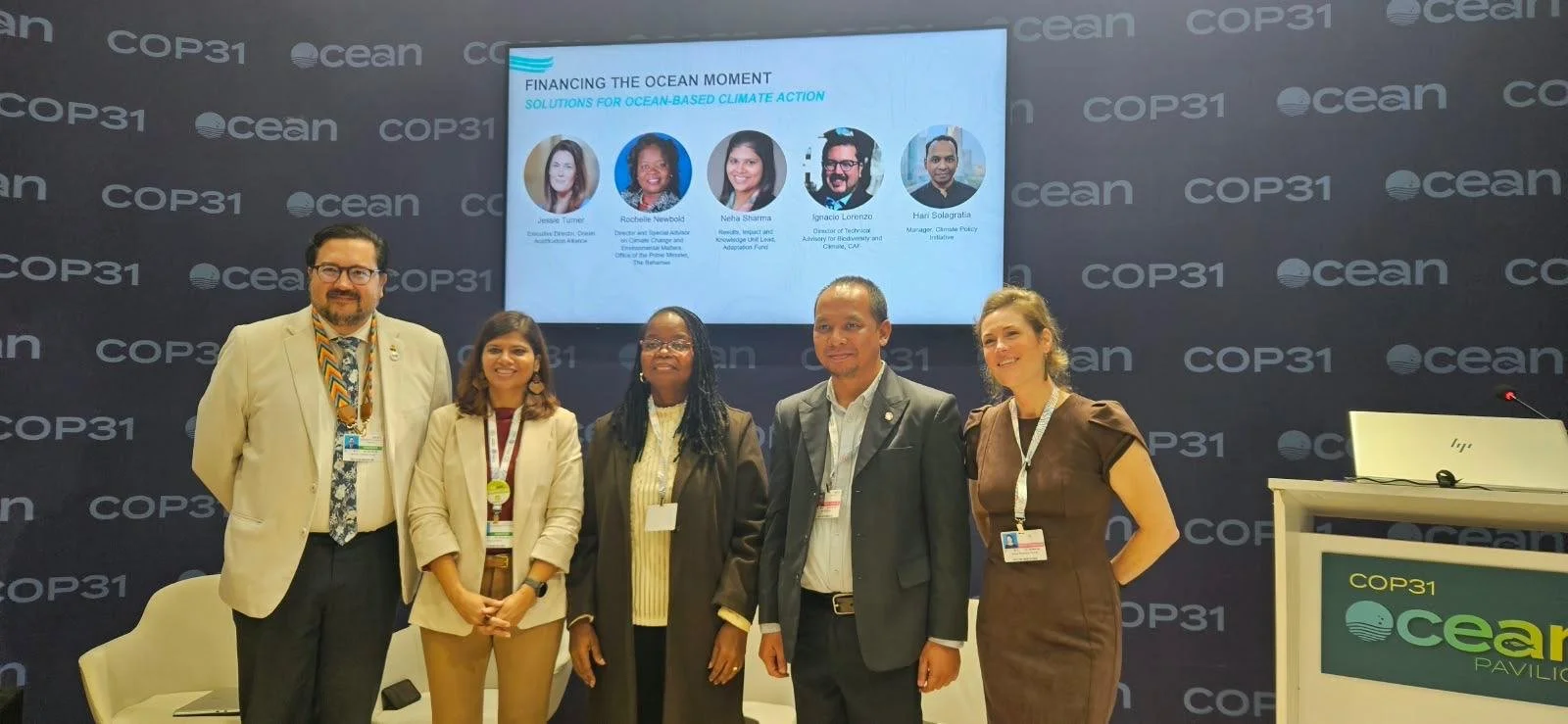
💰 Climate Finance on the Table – Across COP31, governments, development banks and many Pacific leaders called for easier access to climate finance for ocean projects, with ocean finance repeated as a recurring demand. The OA Alliance helped moderate an event on November 13 where panelists from national governments, adaptation funds and regional development banks discussed how best to scale-up financing through innovative sources to invest in countries’ ocean priorities. Development finance institutions increasingly understand their role in funding ocean-climate related projects across sectors like offshore renewable energy, maritime electrification and decarbonization, marine and aquatic food security and blue carbon ecosystems. Now we must ensure countries are equipped and supported in submitting ocean mitigation and adaptation projects for funding.
👏 Country Leadership is Strong on Ocean Acidification - On November 19 we saw Portugal’s DGPM - Directorate General for Maritime Policy launch their Ocean Acidification Action Plan and host an event that brought together government representatives and regional experts from Portugal, Jamaica, Canada, the Netherlands, and the Mediterranean to share how they are driving domestic action on ocean acidification. Portugal's leadership in bringing OA Action to COP31 is a significant achievement and meaningful push for keeping ocean acidification on the global climate agenda. We are so encouraged to see more countries stepping up to take domestic action through the creation of National Ocean Acidification Action Plans.
🌏 Leadership Beyond the Pacific - Pacific leaders have driven much of the momentum for ocean-climate action, but ocean acidification is not the Pacific’s burden to carry alone. With COP31 having been hosted on the Mediterranean coast, it was positive to see the COP31 Presidency of Türkiye taking on the ocean as a hallmark issue. The leadership shown by the COP31 Presidency in shaping and releasing the Compact sets a strong course for how ocean-climate action should be implemented, integrated and funded in the years ahead.
Highlights
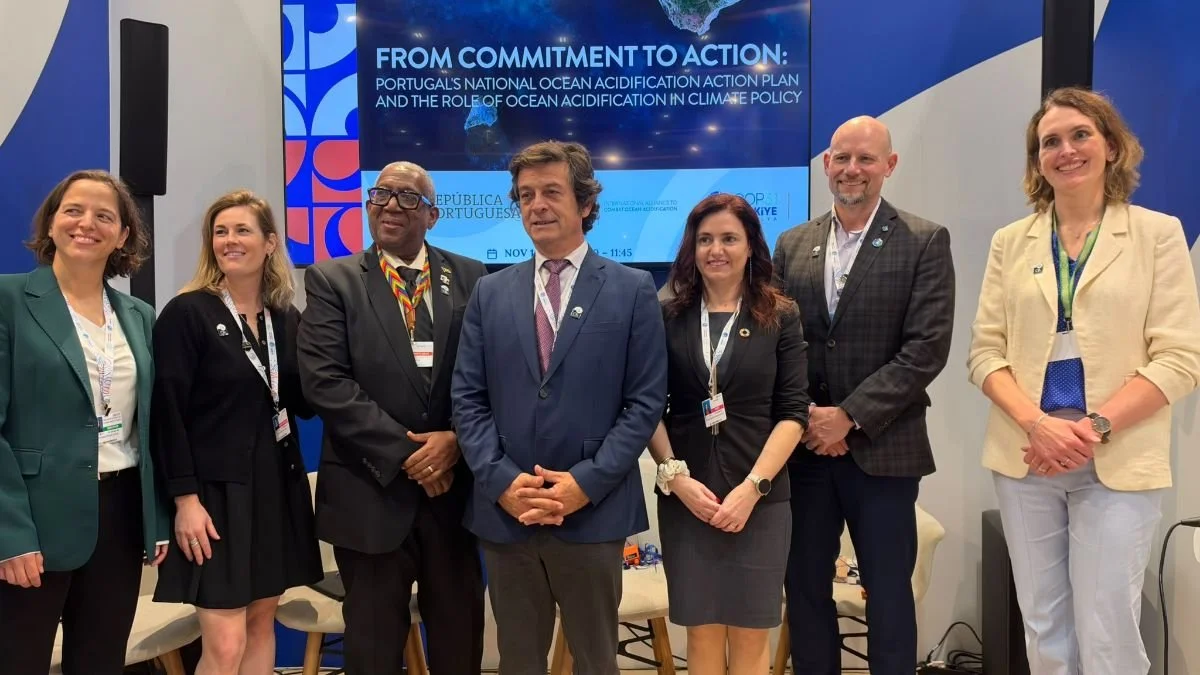
From Commitment to Action: Portugal's National Ocean Acidification Action Plan and the Role of Ocean Acidification in Climate Policy
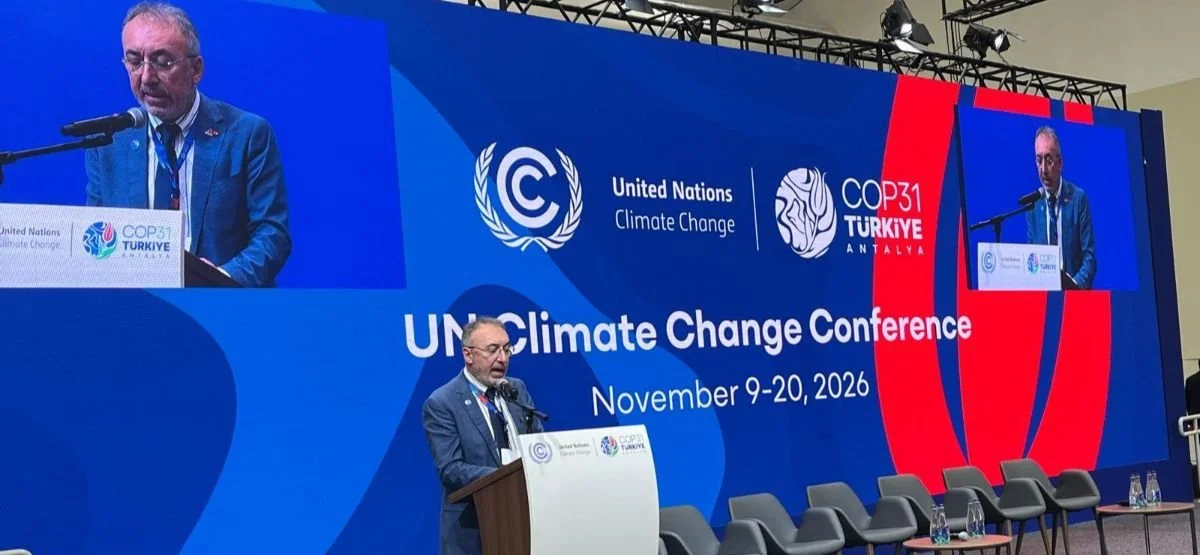
The event took place on Thursday, November 19, 2026 at the Portuguese Pavilion. It was organized by the Directorate-General for Maritime Policy, Portugal (DGPM) to launch the Portuguese OA Action Plan and brought together government representatives and regional experts from Portugal, Jamaica, Canada, the Netherlands, and the Mediterranean to share how they are driving domestic action on ocean acidification.
Speakers:
Salvador Malheiro, Secretary of State for Fisheries and the Sea, Portugal
Marisa Lameiras da Silva, Director-General of DGPM, Portugal
Mercedes M. Cañas, Portfolio Manager, Marine Conservation & Food Systems, IUCN Centre for Mediterranean Cooperation (IUCN-Med)
Dale Webber, Special Envoy for Climate Change, Environment, Ocean and Blue Economy, Jamaica
Andrew McMaster, Director of International Ocean Policy, Fisheries and Oceans Canada
Linda Van Houwelingen, Deputy Director of the Climate Division, Ministries of Economic Affairs and Climate Policy, Netherlands
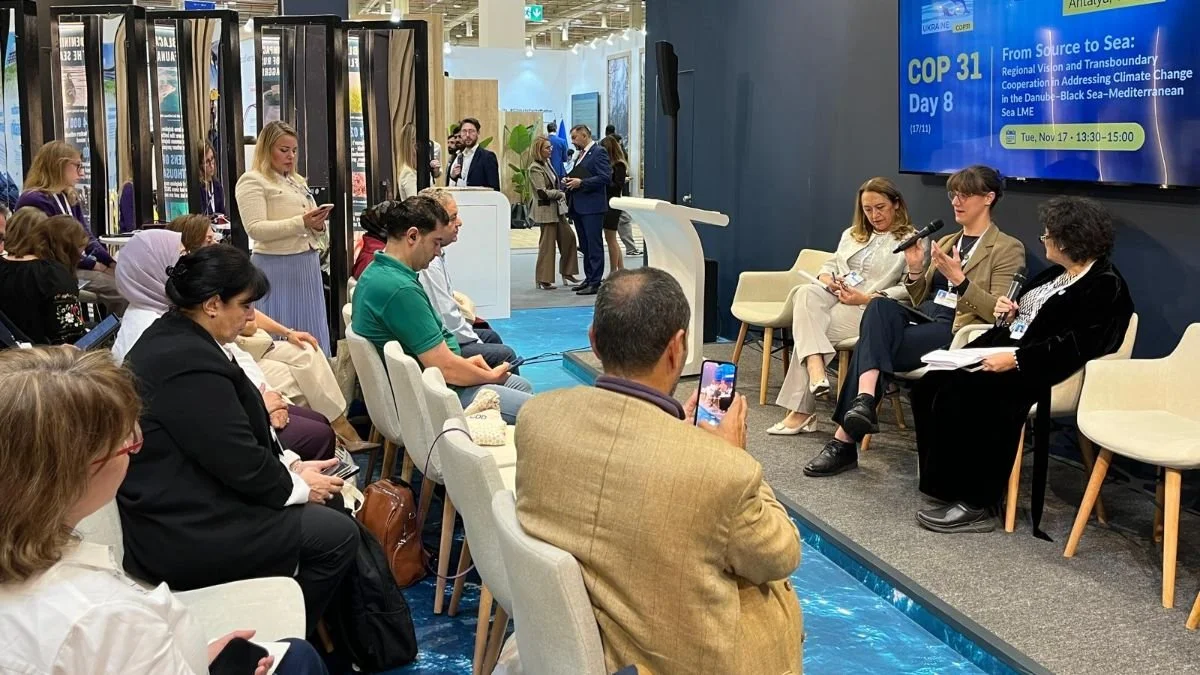
From Source to Sea: Regional vision for transboundary cooperation in addressing climate changes in the Danube-Black and Mediterranean Sea
The event took place on Tuesday, November 17, 2026 at the Ukrainian Pavilion. Inken Dressler, EU Programme lead for the OA Alliance took part in the event, organized by: UN Environment Programme, UN Barcelona Convention, HELCOM, Ministry of Economy and Environment of Ukraine.
Participants demonstrated how stronger regional cooperation, ecosystem-based solutions and integrated governance can contribute to climate resilience and environmental security. The OA Alliance provided an overview of our EU Regional Programme, which is working to connect emerging ocean acidification science to Regional Seas Conventions and EU Directives for policy response.
What Comes Next
Over the next 12 months, the Alliance is calling on governments to:
Join the OA Alliance Leadership Circle and nominate an ocean acidification focal point in their Ministry.
Commit to reporting on SDG indicator 14.3.1 on ocean acidity.
Bring ocean acidification into their next Nationally Determined Contribution or National Adaptation Plan.
Back ocean action across mitigation, adaptation and finance, including funding for increased monitoring and regional coordination on ocean acidification measurement and policy response.