Challenges Facing Climate-Ocean Change Communications
For more than a decade, the OA Alliance, scientists and NGO partners have tried to communicate the basics of ocean acidification. What is it? What is it caused by? Why should we care? What should we do?
Our main messages have traditionally focused on explaining the technical, chemical and often obscure issues of climate-ocean change and acidification. These messages have faced a number of hurdles in volatile political landscapes and the 24-hour news cycle. Policy makers (rightfully) respond to the global context that immediately surrounds them, making it more challenging to keep issues like climate change and ocean acidification on their main agendas. The pace and fractiousness of our current media landscape makes it very difficult to sustain attention from reporters and individuals on the complexities of issues like climate-ocean change.
Since launching our creative comms programme in 2023, the OA Alliance has increasingly recognized the need to communicate for emotional impact and behavior change, understanding that our role is to make“the unseen impacts of climate-ocean change seen and emotionally felt.” We believe that if we can convey human stories and emotion rather than only facts and data, we will inspire more motivation for action from policy makers, funders, traditional ocean conservation communities and the public.
On April 22, the OA Alliance hosted a webinar with communications experts who we’ve partnered with since launching our creative comms programme. During this webinar, we discussed the evolving landscape of communicating about climate change and ocean acidification in a rapidly changing world and media environment.
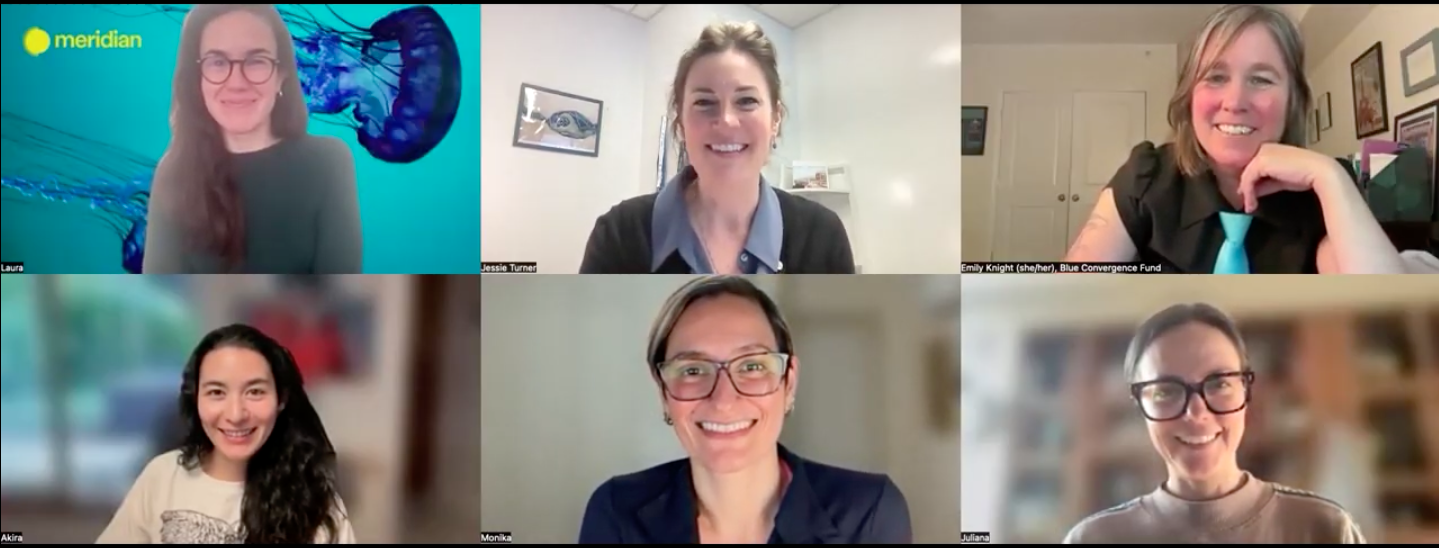
Reflections included the challenges that we need to overcome as a community to inspire more action against climate and ocean change, recommendations to improve our communications, and new roles for creative mediums in storytelling about climate and ocean change.
Antidotes to Challenges in Media
During her presentation, Ms. Laura Secorun, Managing Director at Meridian Agency set the tone by describing the media ecosystem surrounding climate-ocean issues and how recent communication efforts have been affected by a decrease in trust, decrease in attention span, and increase in misinformation.
However, Laura offered “antidotes” to these challenges that might allow our comms to break through the noise. These include:
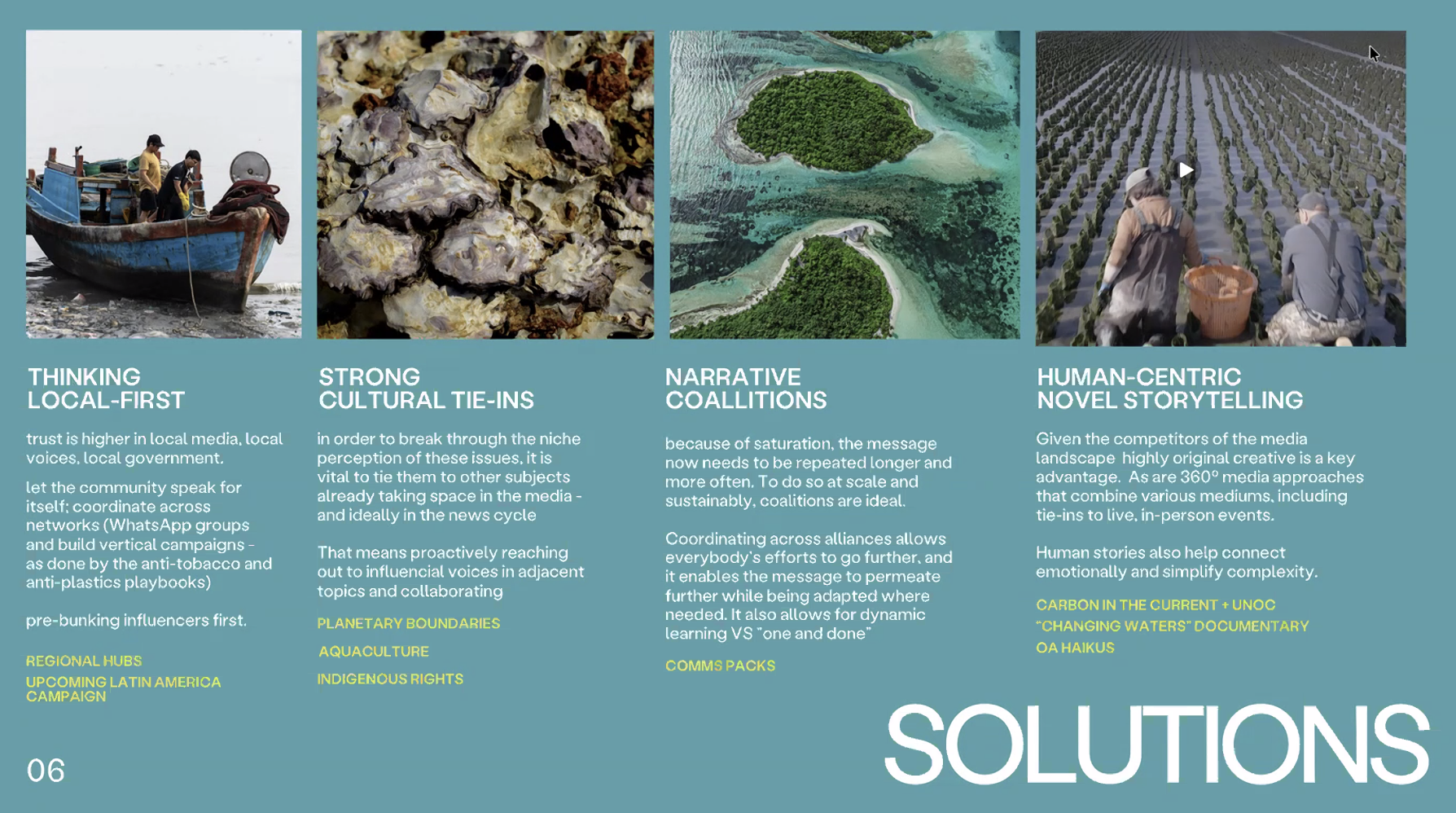
Thinking local first and providing place-based stories.
Ensuring strong cultural tie-ins to the issue of acidification.
Building coalitions that can help reinforce key messages and narratives.
Prioritizing human-centric story telling.
At the OA Alliance, we are proudly shifting our communications strategy in-line with these “antidotes” and finding the right strategic partners to bring our work to life.
“The good news? We are on the rise in interest. Google searches on ocean acidification have tripled over the past 20 years. Now we need to tell the story in ways to keep the audience interested and keep the momentum.” - Laura Secorun, Managing Director, Meridian Consulting.
Building on a decade of learnings, the OA Alliance has started to refine our narrative, putting forward local-stories and regional narratives, while simultaneously focusing on the importance of creating a shared language when communicating about ocean acidification.
We’ve crafted a diverse group of materials as part of our Communications Pack that aim to make the subject of acidification more approachable and easy to grasp. With materials such as a Glossary,Key messages, and Communications Best Practices, we are harmonizing the way our coalition speaks about the causes, impacts, and solutions to ocean acidification.
The Basics of Good Storytelling
Ms. Mónika Naranjo-Shepherd, Director of LUMA Storytelling, is another partner we’ve met along the way. Together, we created Changing Waters, the first ever OA Alliance short film to focus on highlighting the untold stories of the seafood industry, indigenous communities, government individuals and scientists who are responding to the accelerating impacts of ocean acidification and calling for action.
“Just because you are passionate about your science does not mean that the rest of the world should care about it. Storytelling is how you make us care.” - Mónika Naranjo-Shepherd, Director, LUMA Storytelling.
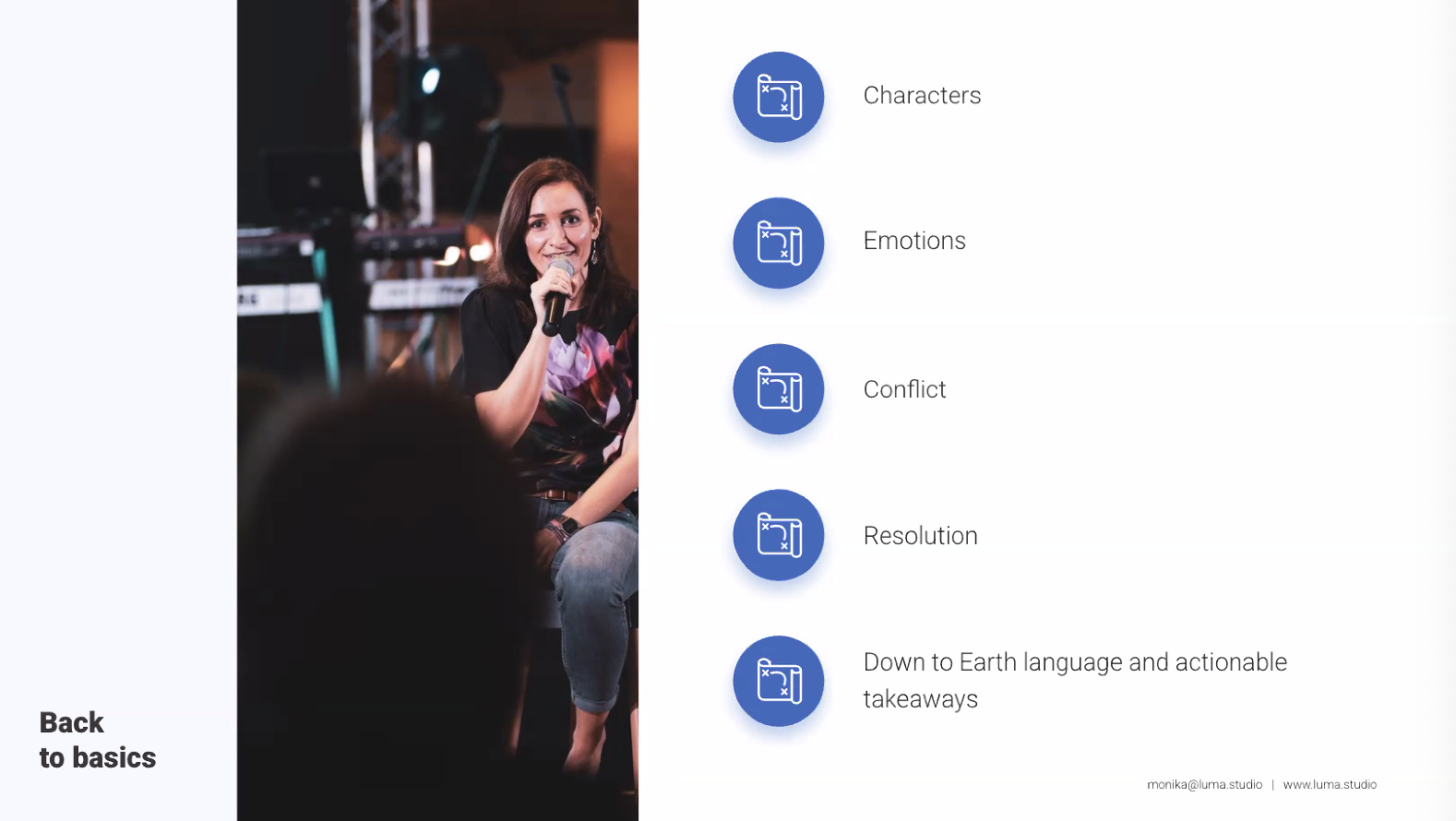
Mónika shared the key ingredients to good storytelling: characters, emotions, conflict, resolution, “down to earth language”, and actionable takeaways. She explained how she used these key ingredients to turn our content on ocean acidification science and research needs into such a compelling story focusing on emotional connection with clear actionable take-aways.
"Connection is the only way humans have to assign value to information. If you don't care then you don't know what is important vs what is not.”
Getting Creative
Ms. Akira Biondo, Director of Operations at PangeaSeed Foundation, spoke about the role of artistic expression in communicating climate-ocean change science and action.
“Why does the ocean need art? It opens the door to broader engagement through creative advocacy. This is not just complimentary but very important in making these issues visible to audiences.” - Akira Biondo, Director of Operations, PangeaSeed.
Through our partnership with PangeaSeed, the OA Alliance had the opportunity to convert acidification science and data sets into a first of its kind 3D digital artistic animation conveying the impacts of climate change in our ocean. Carbon in the Current uses a stunning spectrum of colorful stripes to visually represent the rapid rate of change in ocean acidification recorded by global and regional observations over the past 40 years, and brought ocean acidification art into a gallery setting.
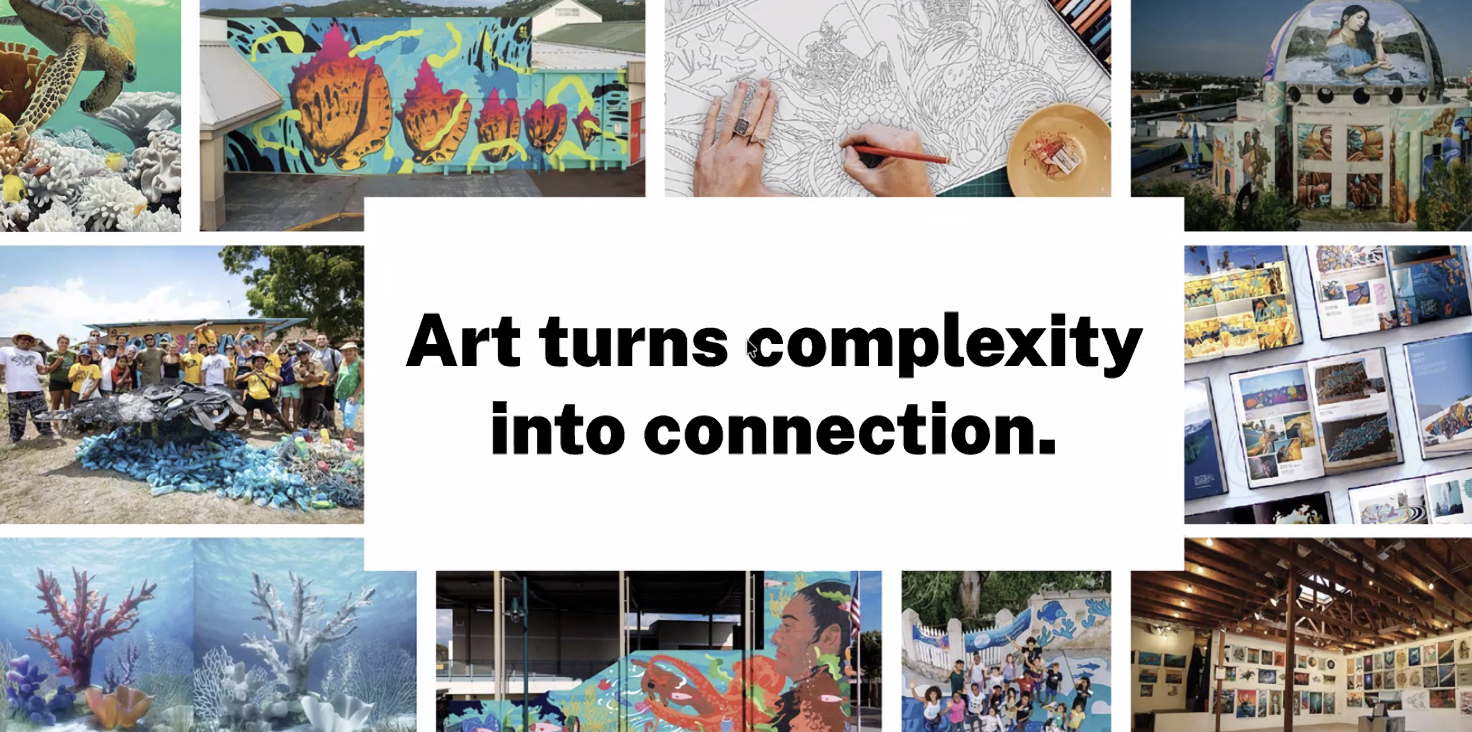
“The big question in taking on an artistic project like this is: will it move the needle? Will a new way of seeing lead to a new way of acting?” asked the OA Alliance at the time. PangeaSeed believes, yes. While the total value of artistic expressions’ ability to change hearts and minds may never be perfectly captured, just because the value is sometimes intangible, doesn’t mean it’s not impactful.
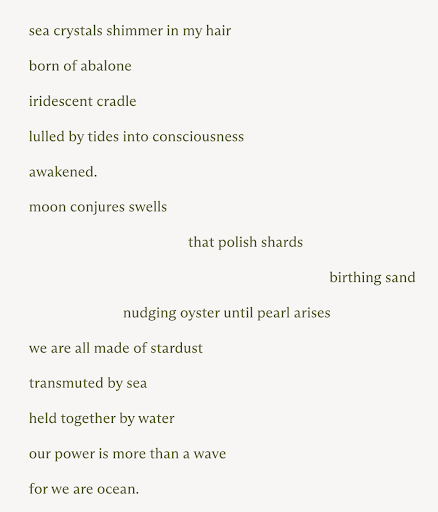
Saltwater Siren, by Lauren Ito. Poem shared during our webinar by Emily under the context of wonder and the nature of our times.
Finally, Dr. Emily Knight, Director of Outreach & Engagement at the Blue Convergence Fund, delighted us with her perspective and own personal experience in using poetry as a tool for community building, a vehicle for education, and to motivate action for climate-ocean outcomes.
Emily imparted three valuable points about the relationship between poetry and science: (1) they are allies, (2), they are united by the same sense of wonder, and (3) by welcoming an emotional aspect into science, we are given permission to stop separating our feelings from the facts and what these challenges mean to us.
The OA Alliance tried out our first ever OA Haiku poetry campaign during World Ocean Day 2024, which tapped into our narratives and community on a more personal level.
“What unites poetry and science is a sense of wonder. Wonder is a state of mind and an action. Doing research is an act of curiosity of how the world works. Writing poetry is an act of personal curiosity, of your place in this world”. - Emily Knight, Director of Outreach & Engagement at the Blue Convergence Fund.
What Does It All Mean ?
Positioning climate-ocean change and acidification around relevant and more mainstream topicssuch as urgency for reduction of carbon emissions, improving risk assessments, ensuring seafood security, reducing pollution control, and conservation measures like blue carbon is a good idea!
We need to get better at messaging in local and regional contexts with place-based information and insights. It’s important to build credibility and diversity in our climate-ocean network and to establish clear calls to action for specific audiences and sectors. Focus on bite sized/ easy to digest communications for press releases and on social media. Above all, humanizing the issue through good storytelling and creative projects is key.
Science and art, in all of their expressions, are often thought of as separate. Through these experiences, we’ve proved that science is an expression of creativity and passion, and that those working in the more obvious creative fields are hungry to use that knowledge and passion in science as vessels for their inspiration.
Understanding the world and communicating our experience is innate to humans, we at the OA Alliance want to honor and utilize that for our shared benefit. At the OA Alliance, we will continue our path of bringing OA science and information close to more people through innovative creative channels. We’ll work hard at uniting these worlds. They are fueled by the same passion and the same feeling of helping us understand this world and make it better for future generations to come.