Communities on the Frontlines of Ocean Acidification Bring Urgent Call to Action to COP30
The premiere of the short film "Changing Waters: Time for Action on Ocean Acidification" showed leaders from around the world sounding the alarm on the need to tackle this overlooked climate threat by drastically reducing emissions.
BELÉM, BRAZIL – November 20th, 2025
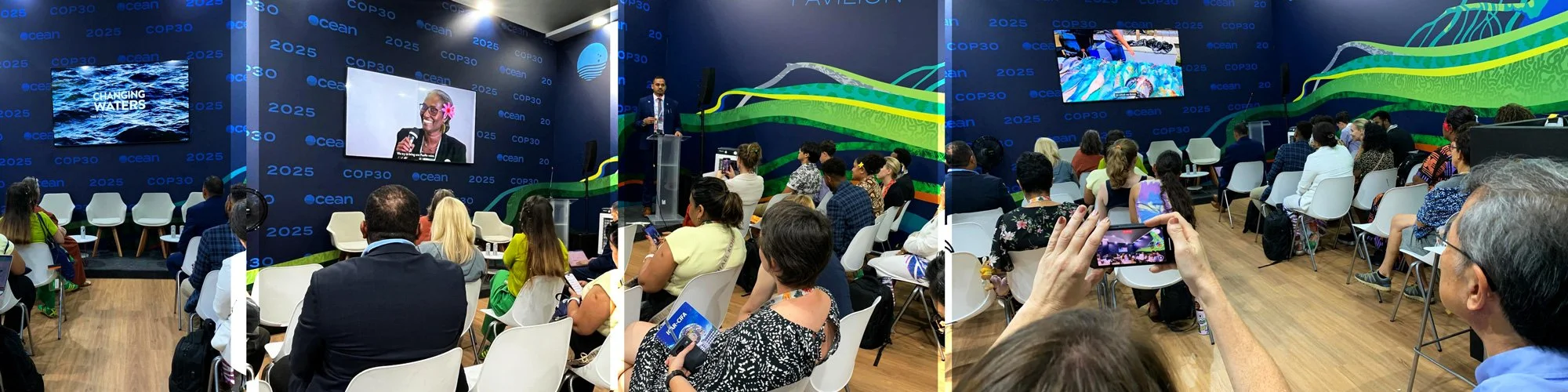
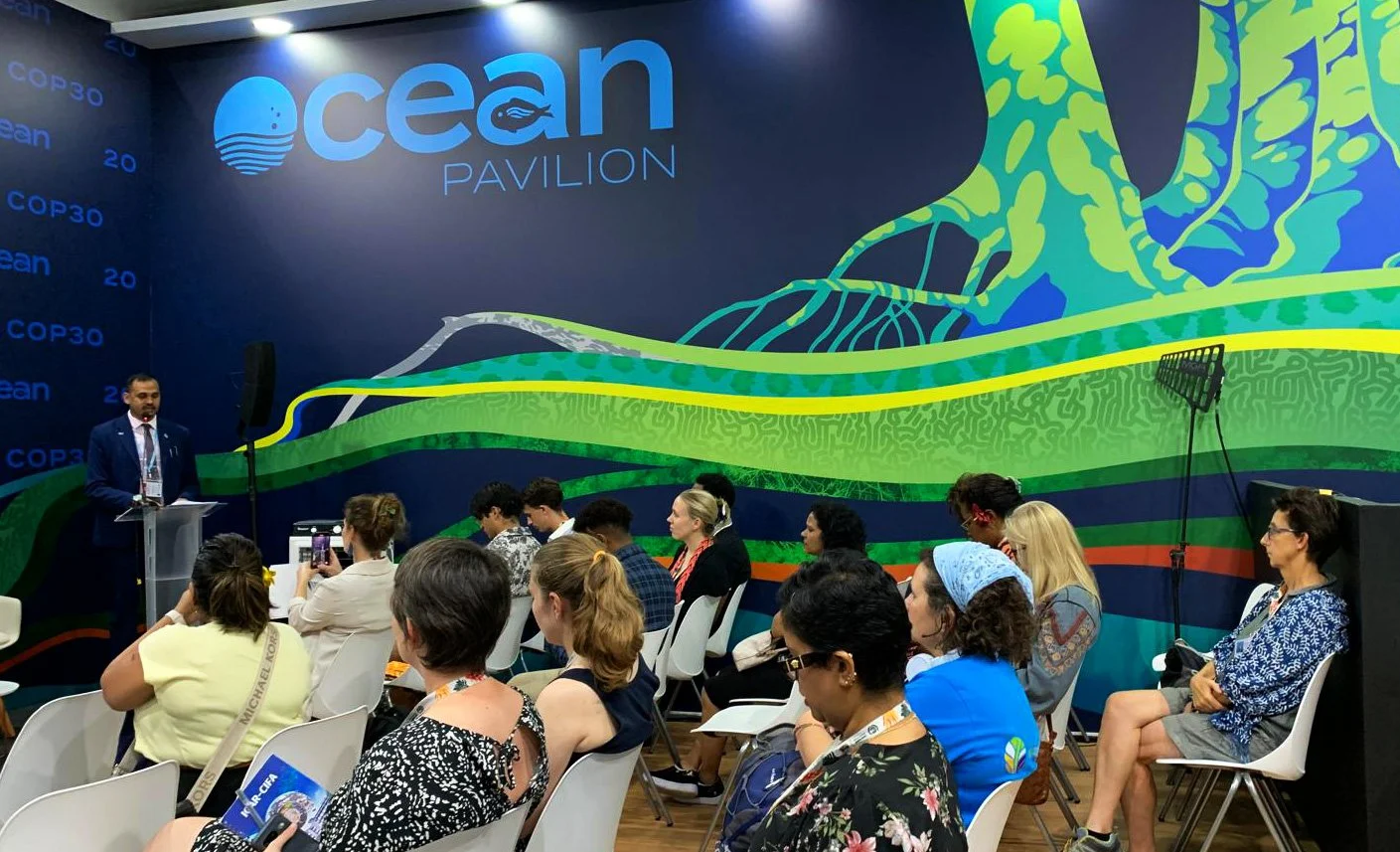
Yesterday evening, the Ocean Pavilion at COP30 filled with policymakers, scientists, and coastal leaders for the premiere of "Changing Waters: Time for Action on Ocean Acidification" - a short film that puts climate challenge into sharp focus and centers the voices of those witnessing and responding to its impacts firsthand.
Produced by the International Alliance to Combat Ocean Acidification (OA Alliance) and LUMA Storytelling, the film bears witness to the work of leaders around the globe - from Washington State, to Fiji and Colombia - showing how they are taking action to protect their coastal resources and documenting what’s at stake if carbon emissions are not drastically reduced.
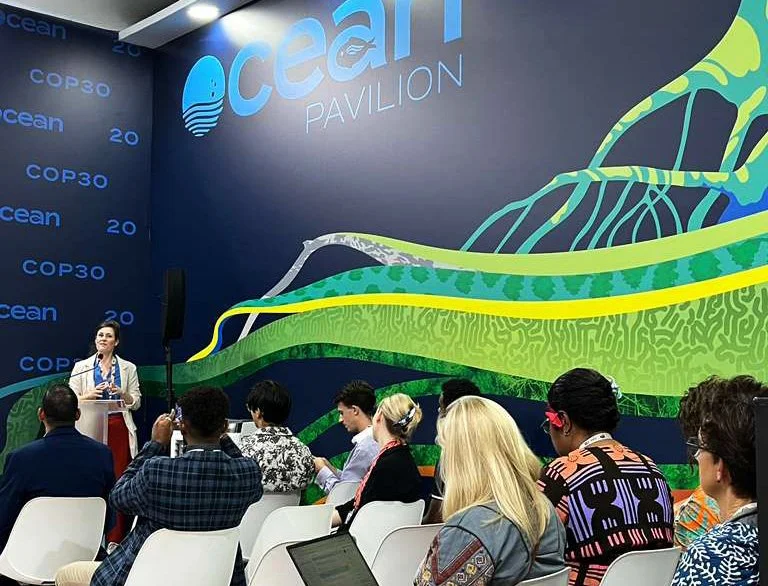
"These partners see, every day, the effects of climate change on our ocean," says Jessie Turner, Executive Director of the OA Alliance. “The film both celebrates their work and honors the sense of urgency we are demanding from global policymakers.”
Why Now: A Struggling Buffer
Ocean acidification has long been sidelined in climate negotiations. Yet it has the same source as climate change: carbon dioxide emissions.
The ocean has already absorbed approximately one-third of the excess carbon dioxide generated from human activities since the Industrial Revolution. But this buffering role has come at a cost: ocean acidity has risen by 30-40%, which, according to the Potsdam Institute for Climate Impact Research, means ocean acidification has already breached its planetary boundary.
COP30 represents a critical juncture as countries negotiate and finalize their climate commitments through Nationally Determined Contributions (NDCs) for 2025-2035 and determine how much financial support should be available for developing countries. It’s a pivotal moment for ensuring ocean acidification is embedded across mitigation, adaptation, and financing plans, from national climate policies to marine and fisheries management strategies.
If leaders miss this window of opportunity for policy action, the negative consequences of ocean acidification will cascade across marine food chains. This includes decreased growth and survival of oysters, crabs, mussels, and corals; declining fisheries production; degraded coral reefs and impacts on everything from large-scale seafood economies, food security, to coastal protection, tourism, and cultural heritage.
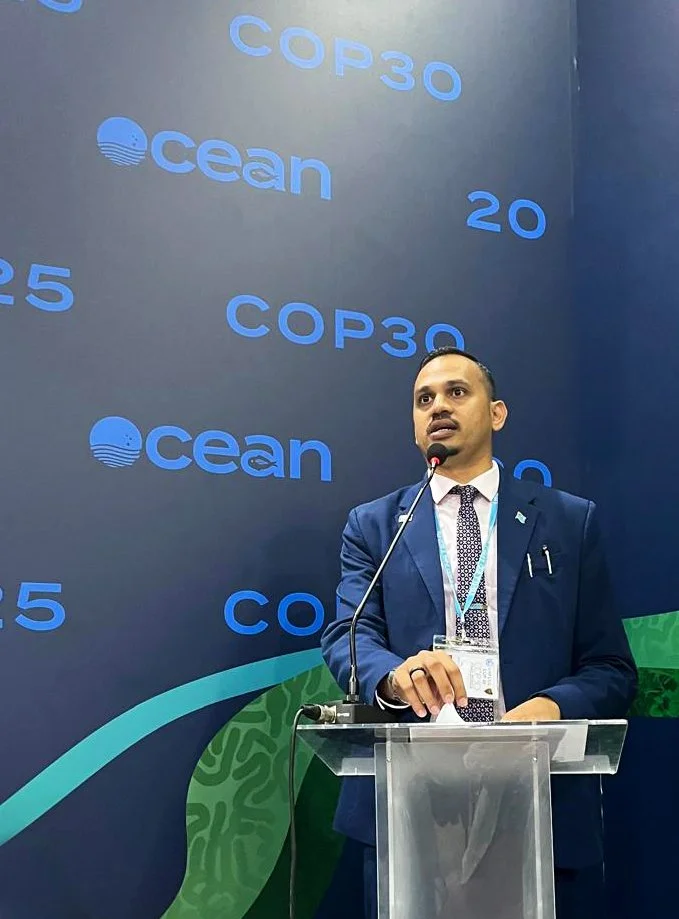
“I am really proud as a son of the Pacific and as a Fijian to say that through our partnership with the OA Alliance and the Pacific Community, we are able to feature our leaders that are responding to this global issue with local action.
You see these same leaders in the corridors of COP30 calling for an integration of ocean language in the cover decision and across all the decisions in the negotiating rooms because we all recognize that to have strong climate action, we need to address the issue at hand. This is why addressing ocean acidification is part of our larger response to climate change.” said Dr. Sivendra Michael, Permanent Secretary of the Ministry of Environment and Climate, Fiji
The Call to Action: Support Local Efforts, Reduce Global Emissions
The coastal communities featured in “Changing Waters: Time for Action on Ocean Acidification” are already tackling this challenge head-on: implementing adaptation strategies in aquaculture, building monitoring networks for baseline data, and developing policy blueprints like those offered by the National OA Action Planning Leadership Circle (which supports 15 countries in mainstreaming ocean acidification across their climate commitments).
Still, their message to COP30 is unequivocal: local action is powerful, but long-term success requires reducing emissions at a global scale. Without addressing the root causes - fossil fuel use, deforestation, agriculture, and certain land uses - even the most valiant localized efforts cannot prevent the ocean from losing its ability to provide us all with the services we’ve come to rely on it for.
"Delegates can not afford to look away anymore," said Turner. "Ocean acidification is happening, and its consequences are being felt. Coastal communities are already leading the way, and now it's time for policymakers at COP30 to match that commitment with urgent, concrete action.”
How to watch
🔗 Media kit available for your use, which includes a link to the full film for your use, plus images and additional quotes
ABOUT THE OA ALLIANCE
The International Alliance to Combat Ocean Acidification brings together governments and organizations from across the globe to increase ambition for climate action and transform response to climate-ocean change. Composed of more than 145 members, including 20 countries, 18 subnational governments, and over 100 affiliate members such as UN intergovernmental organizations, science institutions, NGOs, aquariums, and seafood growers, the Alliance works to elevate ocean acidification policy at the international and domestic level.
For more information, visit www.oaalliance.org/press-room
Contact: Juliana Corrales, Communications Lead / International Alliance to Combat Ocean Acidification (OA Alliance): JCorrales@unfoundation.org